What Is Content Marketing? A Complete Beginner's Guide
Content marketing is one of those terms everyone seems to know until someone asks them to explain it.
Is it blogging, social media content creation, email newsletters or YouTube videos?
The answer is yes, and errrmm… NO.
I know this kind of response confuses people, which is probably why one Reddit user asked a community of marketers:
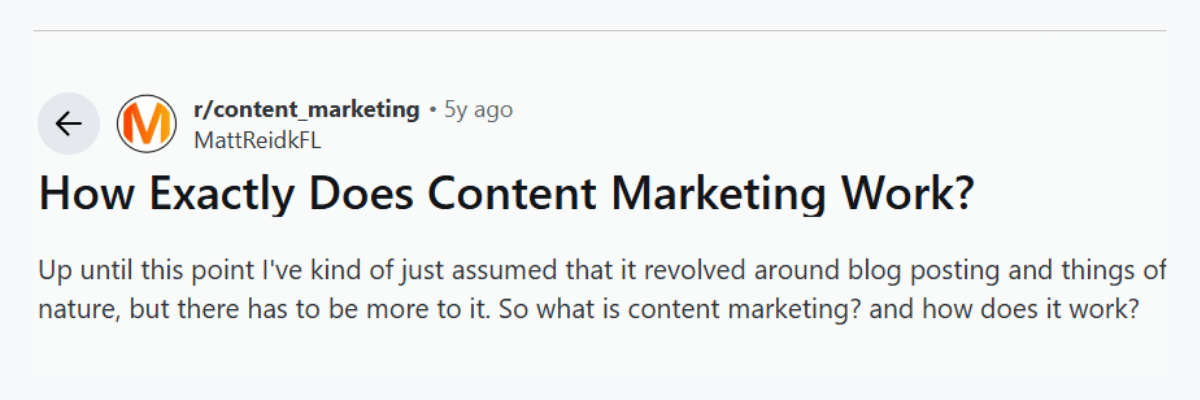
They’re right. There is more to it. In this guide, we’ll break down exactly what content marketing it is, how it works, the different types, and how businesses use it to turn attention into revenue.
Inside This Article
What Is Content Marketing?
Content marketing is the process of understanding an audience, identifying what matters to them, and using content to guide their decisions over time.
This content can take many forms, including blog posts, videos, emails, podcasts, newsletters, and social media posts.
As a content marketer, your job is to influence, earn their attention and trust through content that educates, entertains, or solves a problem.
A good way to see this in action is to look at Airtel Nigeria. Rather than telling people to buy its data plans, Airtel builds stories around the idea that data is life.

Its content shows families, friends, and couples staying connected through the Airtel network.
Over time, this content builds brand awareness and makes Airtel more likely to be considered when people need a data provider.
At it’s best good content marketing helps people make progress while positioning a brand as part of the solution.
Build a Strong Foundation in Content Marketing
Why Is Content Marketing Important?
Content marketing is important because it helps people discover brands, trust them, and eventually become customers.
As a content marketer, here are some of the outcomes your work can create:
- Create awareness and attract potential customers
- Build trust and credibility
- Influence buying decisions
- Generate leads and sales
- Build loyalty and retention
- Create growth opportunities
I’ll break down each of these outcomes and discuss how content marketing team uses content to achieve them.
1. Create Awareness and Attract Potential Customers
Brand awareness is the extent to which people know that a brand exists.
Before someone can trust a business, consider its products, or become a customer, they first need to discover it.
As a content marketer, your role is to help the right people discover a brand. You do this by creating a content strategy that identifies what your target audience wants to learn, the questions they’re asking, and the problems they’re trying to solve.
At Trail Alley, our audience includes people who want to learn digital skills and start careers in tech. Through content research, we know that most of these people are unlikely to search for “Trail Alley” because they may not know we exist yet.
Instead, they’re more likely to search for things like:
- Best tech training institute in Benin City
- Where to learn product design in Benin
- Content writing courses in Benin City
- Digital skills training near me
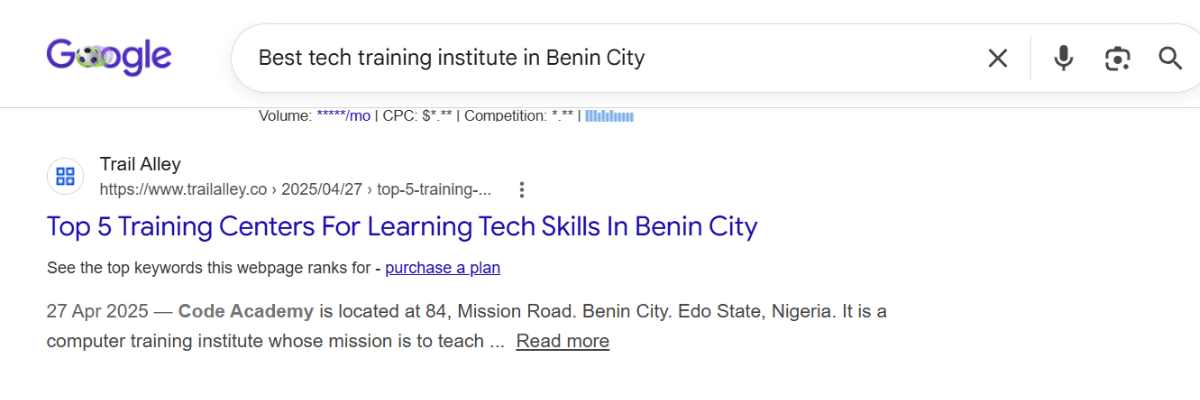
By creating search engine optimized content around these topics, Trail Alley can appear in search results when potential learners are looking for answers.
2. Build Trust and Credibility
Trust is built by repeatedly creating content that helps people solve problems, answer questions, and make better decisions.
For example, someone who first discovers Trail Alley through a guide on where to learn a digital skill may later search for entry-level tech jobs, the best tech career paths, or the most lucrative digital marketing skills.

Each helpful interaction with our content gives the person another reason to trust the brand. Over time, these repeated interactions build credibility and position Trail Alley as a reliable source of information, guidance, and training.
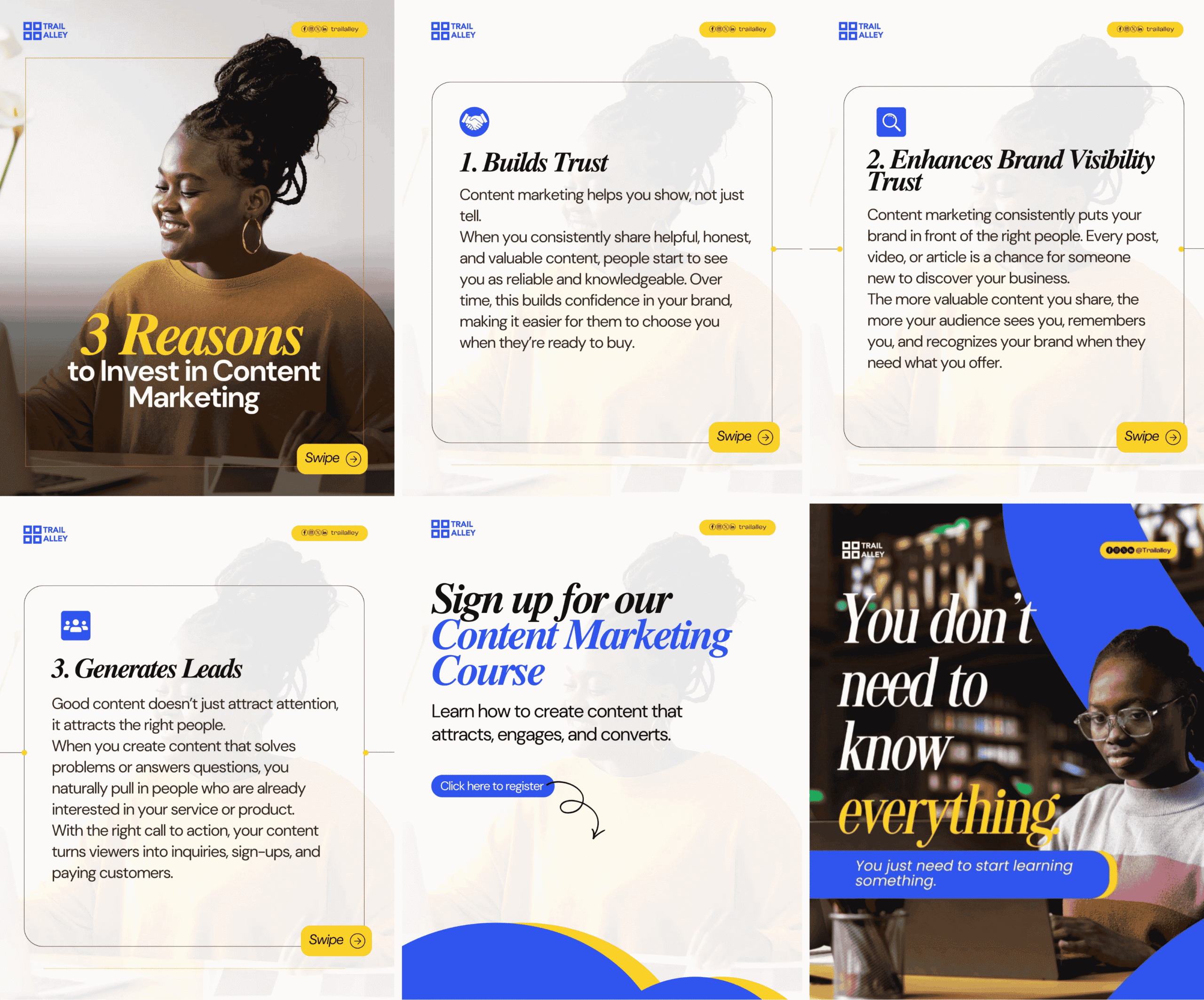
We apply the same principle on social media. A carousel like 3 Reasons to Invest in Content Marketing helps our audience better understand a topic while reinforcing our expertise.
Our goal at Trail Alley is to provide helpful content for our target audience wherever they are asking these questions online, be it Google, AI tools (ChatGPT, Perplexity, etc), or social media.
Learn Content Marketing Through Practical Examples
3. Influence Buying Decisions
People rarely make important decisions after a single interaction with a brand.
Before choosing a product, service, or course, they often compare different options to determine which one best fits their needs.
For example, in our comparison article, 5 Places to Learn a Digital Skill in Benin City, we explore 5 different training providers in the city, including Trail Alley.
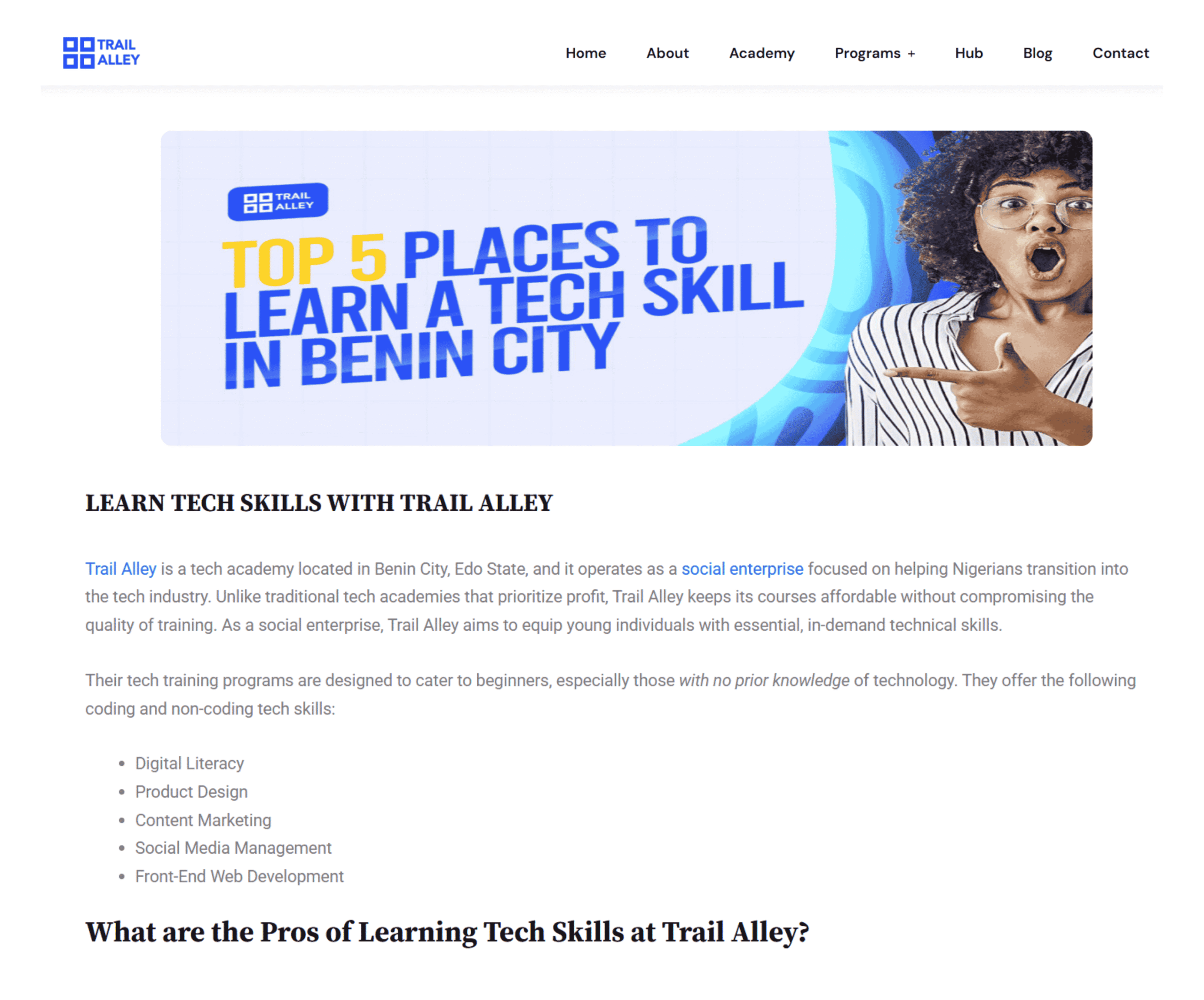
Someone who has previously attended our free workshops, read our blog, or engaged with our social media content is already familiar with our brand.
When they come across a comparison guide like this, that familiarity can shape how they evaluate their options and influence their final decision.
This is why content marketers focus on creating content that builds trust and keeps their brand top of mind. Every helpful article, social media post, email, or workshop builds on the last, making people more likely to choose the brand when they’re ready to make a decision.
4. Generate Leads and Sales
Businesses invest in content marketing because it helps attract the right audience and encourage them to take meaningful actions, such as signing up for a newsletter, creating an account, downloading an app, or making a purchase.
A good example is PiggyVest.
Many people want to save money, invest, or manage their finances better, but they may not know where to start.
Through educational blog posts, social media carousels, and financial literacy campaigns, PiggyVest helps people understand personal finance and develop better money habits.
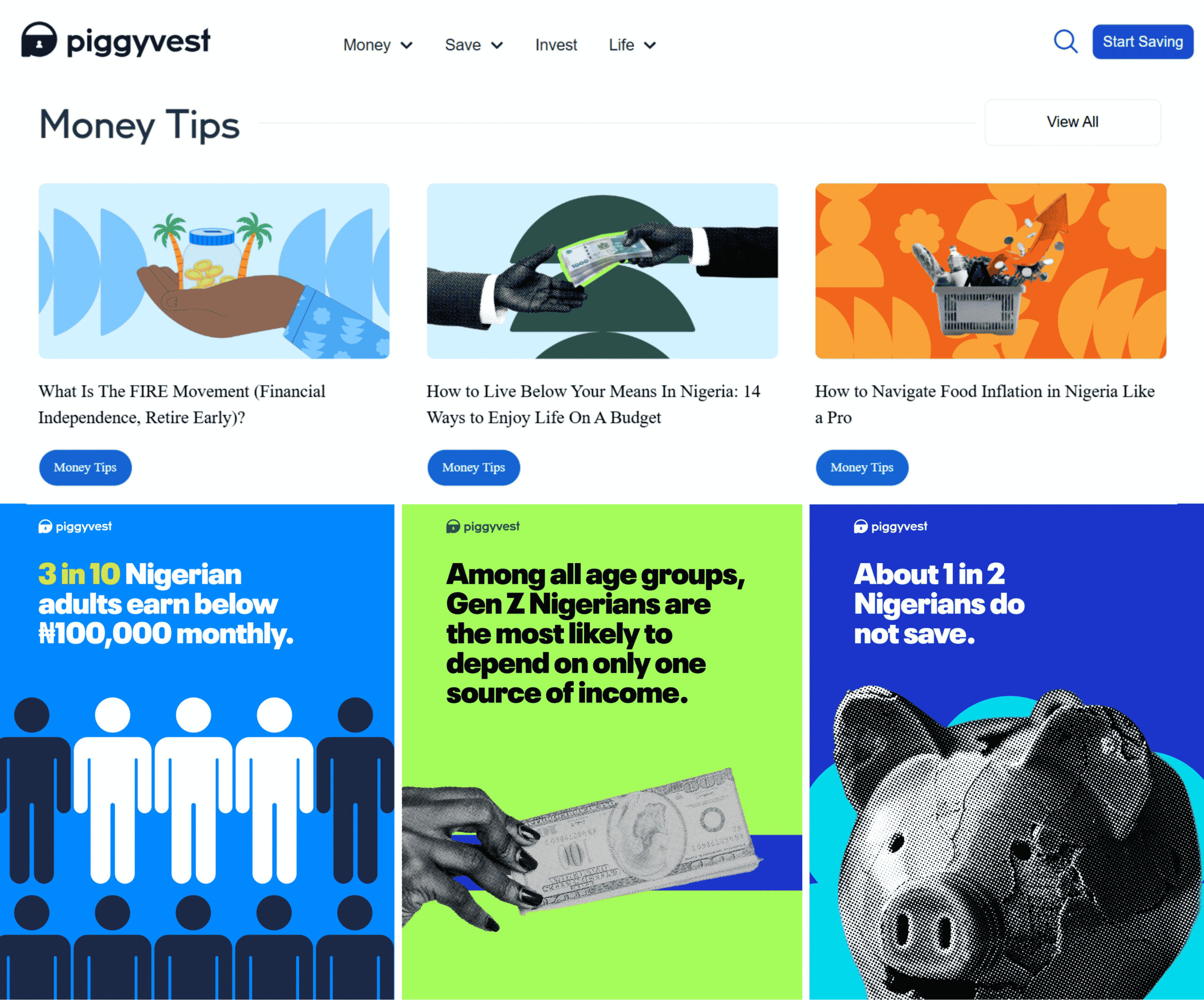
As people consume this content, some decide to take the next step by opening an account, setting a savings goal, or trying one of PiggyVest’s products.
Today, the PiggyVest app has been downloaded by more than one million people on Google Play.
While content marketing is only one part of the company’s overall marketing strategy, it plays an important role in educating potential customers, building trust, and creating opportunities to generate leads and sales.
As a content marketer, your role is to create content that helps people first. When you consistently solve real problems, you make it easier for brands to earn trust, attract qualified leads, and grow their customer base.
5. Build Loyalty and Retention
When someone becomes a customer, you want them to continue engaging with the brand, return when they have a need, and eventually become loyal advocates.
This is known as customer retention. It’s important because it’s often easier and more cost-effective to keep an existing customer than to acquire a new one.
As a content marketer, your job is to create content that keeps customers engaged long after their first purchase.
A good example is BellaBooks. After a period of inactivity, I received an email offering a 10% discount on my next purchase.

Email sequences like this help re-engage customers who haven’t interacted with a brand in a while. You can also build loyalty through newsletters, product updates, educational content, and exclusive offers that keep customers engaged between purchases.
6. Create Career Growth Opportunities
Every result you help a brand achieve becomes proof of your ability as a content marketer. Over time, those results strengthen your portfolio, build your credibility, and open the door to new career opportunities.
For example, during my six years as a content marketer, I’ve helped brands grow their visibility, attract customers, and generate measurable business results through content.
At Trail Alley, I increased organic impressions by 4,463%, from 322 to 14,700, and organic clicks by 1,968%, from 22 to 455.
I also helped a fintech company grow its blog from more than 4,000 impressions to over 64,000 impressions in three months, contributing to more than 1,000 product signups.
Results like these demonstrate your ability to solve business problems, making you more competitive for roles in content marketing, SEO, content strategy, social media marketing, email marketing, and brand storytelling.
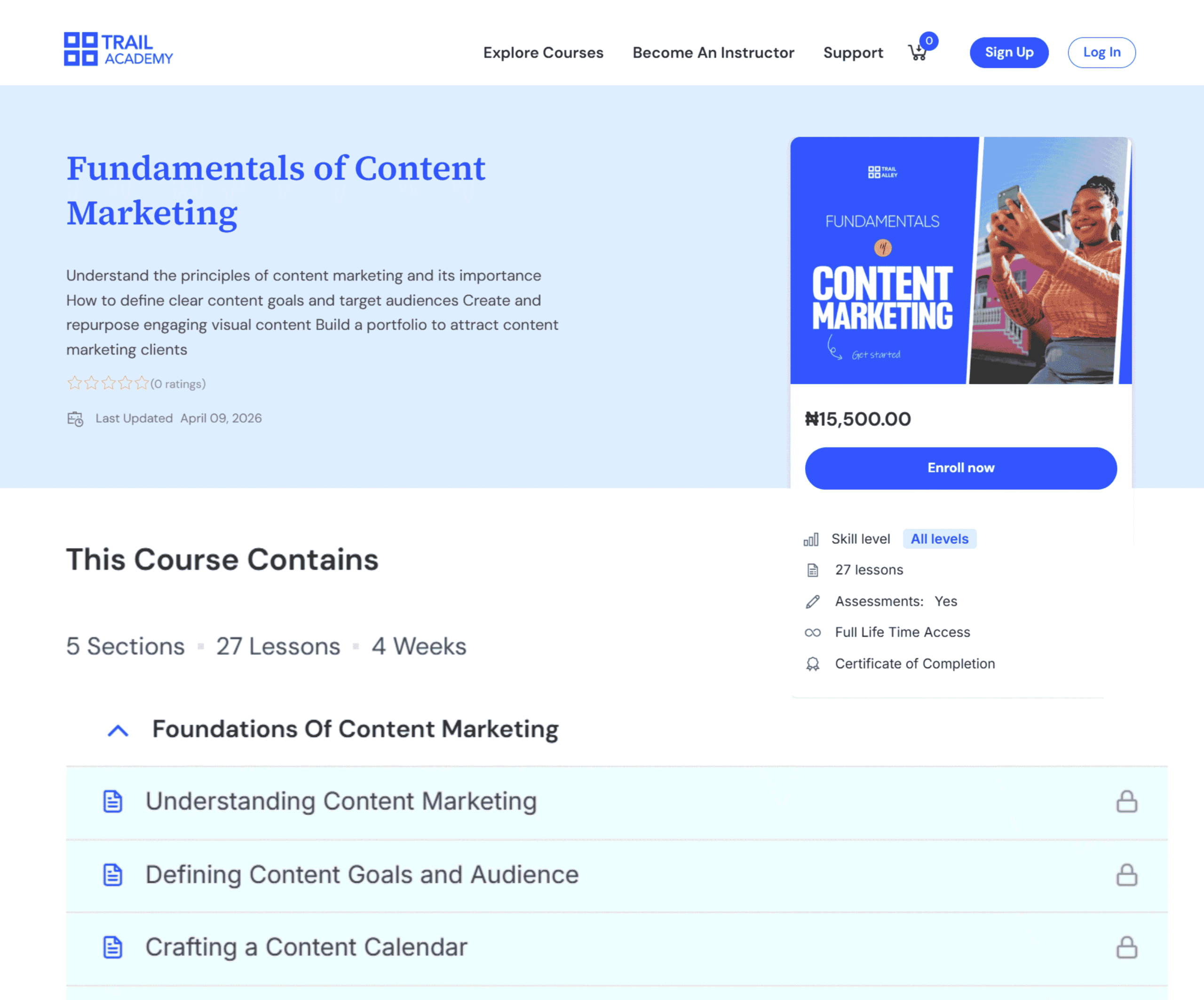
If you’re ready to develop these skills, our Fundamentals of Content Marketing Course is designed to help you build the strategic thinking and practical experience needed to create measurable results for brands.
Become a Certified Content Marketer
Types of Content Marketing
Content marketers use different types of content to create awareness, build trust, generate leads, and retain customers.
Some help attract new audiences through search engines, while others educate prospects, nurture customers, strengthen brand loyalty, or encourage repeat purchases.
Common types of content marketing include blog content, social media content, email marketing, video content, podcasts, webinars, research reports, interactive content, community-led content, influencer marketing, product-led content, user-generated content (UGC), and brand storytelling.
While content marketers use all of these formats, the five below are the most common and are a great place to start.
1. Blog Content
Blog posts help businesses attract people searching for information online. Common examples include how-to guides, tutorials, listicles, case studies, and beginner guides.
2. Social Media Content
Social media content helps brands educate, entertain, and engage their audience. Examples include carousels, infographics, memes, short text posts, and community discussions.
3. Email Marketing
Email marketing helps brands build relationships with subscribers and customers. Common examples include newsletters, welcome emails, product updates, and promotional campaigns.
4. Video Content
Video content helps brands explain concepts, tell stories, and engage audiences. Examples include YouTube videos, webinars, tutorials, live streams, and short-form videos like TikToks and Reels.
5. Podcast Content
Podcasts allow brands and creators to share insights, interviews, and educational content through audio.
These are some of the most common forms of content marketing, but they are far from the only ones.
How Does Content Marketing Influence Buying Decisions?
People rarely become customers after a single interaction with a brand.
Instead, they move through a series of stages known as the buyer’s journey before deciding whether to buy a product, use a service, or enroll in a course.
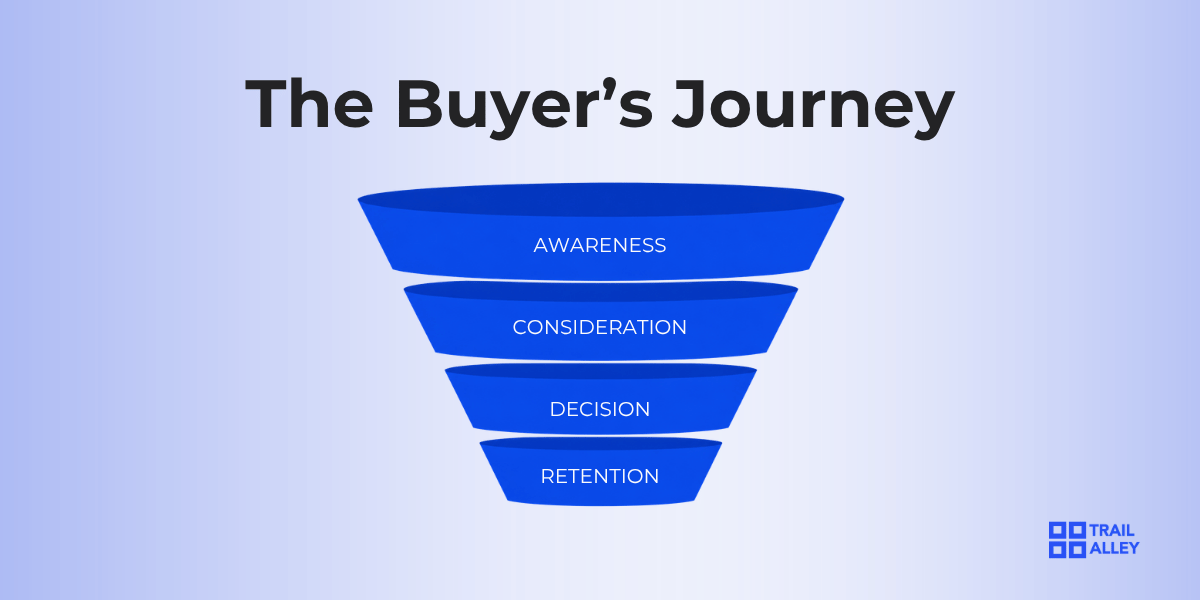
You can use content marketing to influence what people buy by creating content that helps them discover a problem, evaluate their options, make informed decisions, and continue engaging with a brand after making a purchase.
Let’s look at how content marketers use different types of content to guide people through the four stages of the buyer’s journey: Awareness, Consideration, Decision, and Retention.
1. Awareness Stage
The awareness stage is the first stage of the buyer’s journey. It begins when someone realizes they have a problem, question, or goal and starts looking for information.
As a content marketer, your job is to create content that helps people find those answers while introducing them to the brand. For many people, this will be their first interaction with the business.
Common types of awareness-stage content include:
- SEO blog posts
- Educational social media posts
- YouTube videos
- Beginner guides
- Infographics
For example, someone who wants to save money may search for how to save money in Nigeria or best savings apps in Nigeria.
By creating content around these topics, PiggyVest or Cowrywise can appear in Google’s search results, introducing potential customers to their brands before those customers have even decided which savings app to use.

The goal of awareness-stage content is to educate people, increase brand visibility, and make potential customers aware that your brand has a solution to their problem.
2. Consideration Stage
The consideration stage begins when someone understands their problem and starts exploring possible solutions.
At this stage, they’re no longer looking for general information. Instead, they’re comparing options, evaluating alternatives, and trying to determine which solution best fits their needs.
As a content marketer, your job is to create content that helps people compare their options, answer their questions, and make informed decisions.
Common types of consideration-stage content include:
- Comparison guides
- Product reviews
- Case studies
- Expert roundups
- Webinars
- Product demonstrations
For example, someone who wants to improve their savings habits may compare PiggyVest, Cowrywise, and other savings platforms before deciding which one to use.
The better you answer people’s questions and address their concerns at this stage, the more likely they are to choose your brand when they’re ready to make a decision.
3. Decision Stage
The decision stage begins when someone has narrowed down their options and is ready to choose a solution.
At this point, they’re no longer asking, “Which options are available?” Instead, they’re asking, “Can I trust this brand enough to move forward?”
For example, someone considering a content writing course may have already compared different training providers and shortlisted Trail Alley. But before enrolling, they may want to know what they’ll learn, who the course is for, what past students have achieved, how long the course takes, and whether it aligns with their career goals.
As a content marketer, your job is to create content that answers these questions, addresses objections, and gives people the confidence to take the next step.
Common types of decision-stage content include:
- Landing pages
- Sales pages
- Customer testimonials
- Success stories
- Frequently asked questions (FAQs)
- Product demonstrations
When done well, this content removes uncertainty and makes it easier for people to confidently choose your brand.
4. Retention Stage
Retention is the process of keeping customers engaged with a brand after their first purchase or interaction.
As a content marketer, your job is to continue creating content that matches your customers’ needs and interests.
Instead of creating content blindly or constantly asking them to buy again, you provide relevant resources, product updates, educational content, and personalized recommendations based on what they’ve already purchased or the goals they’re trying to achieve.
Common types of retention-stage content include:
- Email newsletters
- Product updates
- Educational workshops
- Community events
- Learning resources
- Exclusive offers
- User-generated content (UGC)
For example, Trail Alley hosted a Resume Writing and LinkedIn Optimization Workshop to help community members improve their job search outcomes.

Someone who has already taken a Trail Alley course may not be looking for another course immediately. However, they may still need help landing a job, improving their resume, or building their professional presence online.
By creating workshops like this, Trail Alley continues to provide value after the initial purchase, keeping learners engaged with the community while helping them progress toward their career goals.
The same principle applies to newsletters, product updates, learning resources, and user-generated content. Every interaction reminds customers that the brand is invested in their success, making them more likely to return, recommend the brand to others, and remain loyal over time.
How Content Marketers Create Results
Behind every blog post, email, video, and social media campaign is a process that content marketers follow to create content that drives measurable results.
Most content marketing workflows follow six steps:
- Create a Content Strategy
- Create a Content Calendar
- Create Content
- Distribute Content
- Measure Performance
- Improve and Optimize
While the process may vary across companies and industries, these six steps form the foundation of most content marketing workflows.
1. Create a Content Strategy
Imagine sending soldiers into battle without a plan. They may have the right weapons and enough manpower, but without a strategy, it’s difficult to know where to focus their efforts or how to achieve their objective.
The same is true in content marketing.
Every brand competes for attention. Whether through blog posts, social media, email newsletters, or YouTube videos, countless brands are trying to reach the same audience.
That’s why content marketers start with a content strategy.
A content strategy is a plan that defines who you’re trying to reach, the goals you want to achieve, the topics you’ll create content about, the channels you’ll prioritize, and how you’ll measure success.
Without a strategy, content marketing becomes random posting. With one, every piece of content has a purpose and contributes to a larger business goal.
A content strategy typically includes:
- Audience research
- Competitor research
- Keyword research
- Customer insights
- Content pillars
- Distribution channels
- Success metrics
The goal is to create the right content for the right audience, on the right channels, to achieve meaningful results for the brand.
Learn How to Build Content Strategies That Work
and measure content that delivers results.
2. Create a Content Calendar
A content calendar helps content marketers plan what content will be created, when it will be published, where it will be distributed, and who is responsible for creating it. It turns strategy into a structured publishing schedule.
Without a content calendar, it’s easy to publish inconsistently, miss important opportunities, or lose sight of your content strategy.
Most content calendars include:
- Content topics
- Target audience
- Publishing dates
- Distribution channels
- Content formats
- Keywords
- Owners and responsibilities
The goal is to ensure every piece of content is planned in advance and aligned with the overall content strategy, making content creation more consistent, organized, and purposeful.
3. Create Valuable Content
With a content calendar in place, the next step is turning planned ideas into publishable content.
Many beginner content marketers think content creation starts with writing. In reality, it starts with research.
Creating valuable content means understanding what already exists, identifying what your audience still needs to know, and finding opportunities to create something more useful than what’s already available.
To do this, content marketers often:
- Research what competitors have already published.
- Identify content gaps and unanswered questions.
- Gather insights from Google, AI tools, Reddit, forums, and social media.
- Organize their findings into a content outline.
- Write, edit, and optimize the content for publication.
The goal is to create content that is more helpful, comprehensive, and relevant than what’s already available online.
Although this research process is similar across most content formats, the way you create a blog post differs from how you produce an email newsletter, Instagram carousel, YouTube video, or podcast.
In our Fundamentals of Content Marketing Course, we walk through the complete process of researching, outlining, writing, and optimizing content for blogs, social media, email, and video.
4. Distribute Your Content
Creating great content without promoting it is like lighting a candle and placing it under a table. The light is there, but if no one sees it, it can’t educate, influence, or generate results.
Successful content marketers focus on the channels where their target audience is most active and where their content has the greatest chance of being discovered.
For example:
- Google: SEO blog posts, landing pages, and lead magnets
- LinkedIn: Thought leadership posts, professional updates, and document carousels
- Instagram: Carousels, Reels, Stories, and user-generated content (UGC)
- TikTok: Short-form videos, product demos, and behind-the-scenes videos
- YouTube: Long-form videos, Shorts, livestreams, and webinars
- Email: Newsletters, welcome sequences, nurture campaigns, and product updates
Content distribution doesn’t stop at publishing. You may also share your content through email newsletters, online communities, partnerships, social media, or by repurposing it into different formats to reach more people.
The goal is to put your content in front of the right audience at the right time so it has the best chance of achieving the results you planned for in your content strategy.
5. Measure Performance
Publishing content is not the end of the process. To know whether your content is working, you need to measure its performance.
The metrics you track will depend on the platform you’re creating content for and the goals you’re trying to achieve.
Here are some common metrics content marketers monitor:
| Platform | Metrics to Measure |
|---|---|
| Google (SEO Blogs) | Organic traffic, impressions, clicks, click-through rate (CTR), keyword rankings, average engagement time, conversions |
| Reach, impressions, likes, comments, shares, saves, profile visits, follower growth | |
| Reach, impressions, reactions, comments, shares, link clicks, engagement rate | |
| Impressions, reactions, comments, reposts, profile visits, follower growth, link clicks | |
| TikTok | Views, watch time, completion rate, shares, comments, saves, follower growth |
| YouTube | Views, watch time, audience retention, subscribers, click-through rate (CTR), engagement |
| Open rate, click-through rate (CTR), unsubscribe rate, conversions | |
| Website Landing Pages | Visitors, bounce rate, conversion rate, form submissions, revenue |
As a content marketer, your job is to understand which metrics align with your goals. A blog post designed to generate traffic should be evaluated differently from an email campaign designed to generate sales.
Measuring performance helps you understand what’s working, identify opportunities for improvement, and demonstrate the impact of your work.
6. Improve and Optimize
Content marketing doesn’t end after you publish and measure performance. The next step is using what you’ve learned to improve future results.
Sometimes that means updating existing content. Other times it involves testing new headlines, improving calls to action, refreshing outdated information, strengthening internal links, or changing your distribution strategy. Every optimization should be based on data rather than guesswork.
For example, I recently audited a wellness brand’s website and noticed that several blog posts were losing rankings, impressions, and organic traffic.
After reviewing the data, I developed a hypothesis: the content was no longer meeting the quality expected for health-related topics. Many of the articles were thin, lacked credible sources, and didn’t demonstrate enough expertise or trustworthiness.
To test this hypothesis, I refreshed the content by improving its depth, removing unsupported claims, citing reputable sources, strengthening the overall structure, and making the articles more helpful for readers.
Within weeks, the updated content began recovering its rankings and attracting more organic traffic.
Content marketing is an ongoing cycle of creating, measuring, learning, and improving. Each optimization effort provides new insights that help you create stronger content and achieve better results over time.
How to Become a Content Marketer
Becoming a content marketer takes more than learning how to write. It involves developing strategic, creative, and analytical skills that help brands achieve measurable results.
Here’s a high-level roadmap to becoming a content marketer:
- Learn the fundamentals of content marketing.
- Develop core skills like content writing, SEO, content strategy, research, and analytics.
- Choose a specialization based on your interests and strengths.
- Create content consistently to build experience.
- Build a portfolio that showcases both your work and the results you’ve achieved.
- Gain real-world experience through internships, freelance projects, or volunteer work.
- Continue learning as content marketing, AI, search engines, and social media platforms evolve.
The best way to become a content marketer is to learn and start creating.
The more you practice, the better you’ll understand how to create content that helps brands achieve their goals and delivers measurable results.
Build a Strong Foundation in Content Marketing
that helps brands achieve real business results.
Begin Your Content Marketing Journey
Content marketing is all around you.
Every blog post you read, YouTube video you watch, email you open, LinkedIn post you engage with, or social media carousel you save is often part of a larger strategy designed to educate, influence, or help you make a decision.
As you go about your day, start paying attention to the content you consume. Ask yourself why a brand created it, who it was written for, and what action it was trying to encourage.
You’ll begin to notice how content shapes the products we buy, the services we trust, the careers we pursue, and even the opinions we form.
That’s what makes content marketing such a valuable skill. It gives you the ability to create meaningful change by helping people make informed decisions while helping brands achieve their goals.
The fundamentals of content marketing are the foundation for everything you’ll build next, from growing a personal brand to helping businesses generate awareness, leads, and sales. Once you understand how great content is planned, created, and measured, you’ll never look at marketing the same way again.
Start Thinking Like a Content Marketer
SEO, content creation, and performance measurement.

Isabella Osuvwe Enaworu

Isabella Osuvwe Enaworu
Continue Learning